
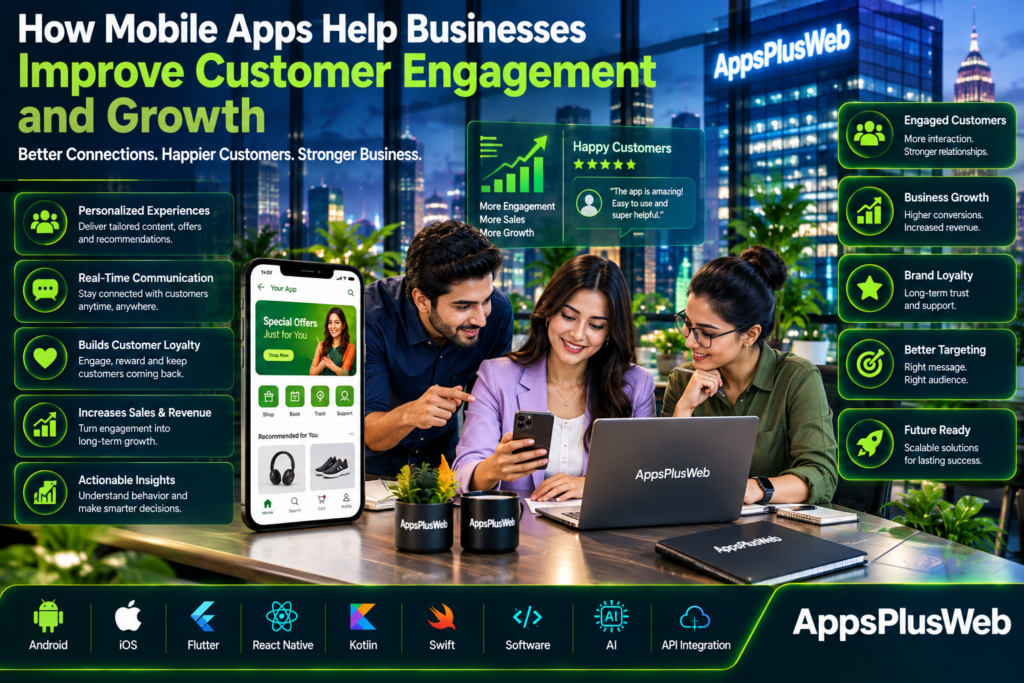
Mobile technology has changed the way businesses connect with their customers. People now expect quick access to products, services, information, and support directly from their smartphones. A well-designed mobile application can provide businesses with a convenient digital channel for building stronger relationships with their audience while creating new opportunities for growth.
For businesses planning to enter the mobile market, working with a reliable mobile app development company can help turn an idea into a practical digital solution. From customer communication and personalized experiences to online transactions and business analytics, mobile applications can support different areas of modern business operations.
How Mobile Apps Improve Customer Engagement
Customer engagement is about creating meaningful interactions between a business and its audience. A mobile application gives customers a direct channel through which they can interact with a brand whenever they need it.
Instead of depending entirely on websites, emails, or physical locations, businesses can provide services through an application that remains easily accessible on a customer’s smartphone.
Mobile apps can help businesses:
- Provide faster access to products and services
- Communicate directly with customers
- Offer personalized experiences
- Simplify purchasing and booking
- Provide customer support
- Share useful updates and information
This continuous accessibility can make the customer journey more convenient and encourage users to interact with a business more frequently.
Better Customer Experience Through Mobile Apps
A positive user experience can influence how customers perceive a business. Mobile applications allow businesses to design experiences specifically for smartphone users.
Simple navigation, clear menus, fast-loading screens, easy registration, and convenient payment options can reduce unnecessary steps during customer interactions.
For example, an eCommerce application can allow users to browse products, save favorites, add items to a cart, complete payments, and track orders from one platform.
Similarly, healthcare applications can support appointment booking, consultation management, reminders, and access to relevant information.
By organizing important services within one application, businesses can create a smoother and more convenient experience for their customers.
Push Notifications and Real-Time Communication
Push notifications are one of the useful tools available through mobile applications. Businesses can use notifications to communicate important information directly with users.
Notifications can be used for:
- New product announcements
- Special offers
- Appointment reminders
- Order updates
- Payment confirmations
- Service alerts
- Important business information
When used thoughtfully, notifications can help businesses maintain regular communication with their audience without requiring customers to actively search for updates.
Businesses should focus on sending relevant and useful messages rather than overwhelming users with frequent notifications. Meaningful communication can create a better experience and encourage continued application usage.
Mobile Apps Can Increase Business Opportunities
A mobile application can open additional channels for generating revenue and delivering services. Businesses can use apps for direct sales, subscriptions, bookings, memberships, digital services, and customer loyalty programs.
For example, restaurants can provide online ordering, real estate businesses can display property listings, educational organizations can deliver learning content, and service providers can allow customers to schedule appointments.
Mobile applications can also support loyalty programs by allowing businesses to provide rewards, membership benefits, personalized offers, and purchase histories.
These capabilities can make it easier for customers to interact with a business while giving companies additional opportunities to develop long-term customer relationships.
Data and Analytics for Smarter Business Decisions
Mobile applications can provide useful insights into customer behavior. Businesses can analyze information such as frequently used features, popular products, session activity, and customer interaction patterns.
These insights can help organizations understand what users value and where improvements may be required.
For example, if analytics show that customers frequently visit a particular service section, the business can prioritize that area for future improvements. Similarly, businesses can use engagement information to refine marketing campaigns and introduce features based on customer needs.
Responsible data management and appropriate privacy practices should always be part of an analytics strategy.
Why Businesses Need a Scalable Mobile App Strategy
Business requirements can change as a company grows. An application that meets today’s requirements may need additional capabilities in the future.
A scalable mobile app strategy allows businesses to plan for new users, features, integrations, and technologies. A strong technical foundation can make future improvements easier to implement.
Businesses should consider performance, security, database architecture, cloud infrastructure, API integrations, and maintenance during the initial planning stage.
A scalable application can support continuous development rather than requiring major redevelopment whenever the business introduces a new service or feature.
Choosing the Right Development Partner
Selecting the right development partner is an important step when creating a business application. Companies should evaluate technical expertise, design capabilities, development methodology, testing standards, communication, security practices, and post-launch support.
Businesses should also review previous projects to understand the development team’s experience with different industries and application types.
For organizations looking for a local technology partner, a mobile app development company in Delhi can provide customized solutions for startups, small businesses, growing companies, and established enterprises.
The development partner should understand the business objective instead of focusing only on technical implementation. Clear communication between the business and development team can help maintain project direction from planning through launch and future updates.
Conclusion
Mobile applications can provide businesses with a powerful way to improve customer engagement, simplify services, strengthen communication, and create new growth opportunities. From personalized experiences and real-time notifications to analytics and digital transactions, apps can support multiple areas of the customer journey.
However, successful mobile development requires more than simply creating an application. Businesses need clear objectives, thoughtful design, suitable technology, strong security, quality testing, and a strategy for future improvements.
AppsPlusWeb helps businesses transform their digital ideas into modern mobile applications designed around their specific goals and customer needs. With structured planning, user-focused design, advanced development practices, and ongoing support, businesses can create mobile experiences that contribute to stronger customer relationships and sustainable digital growth.