
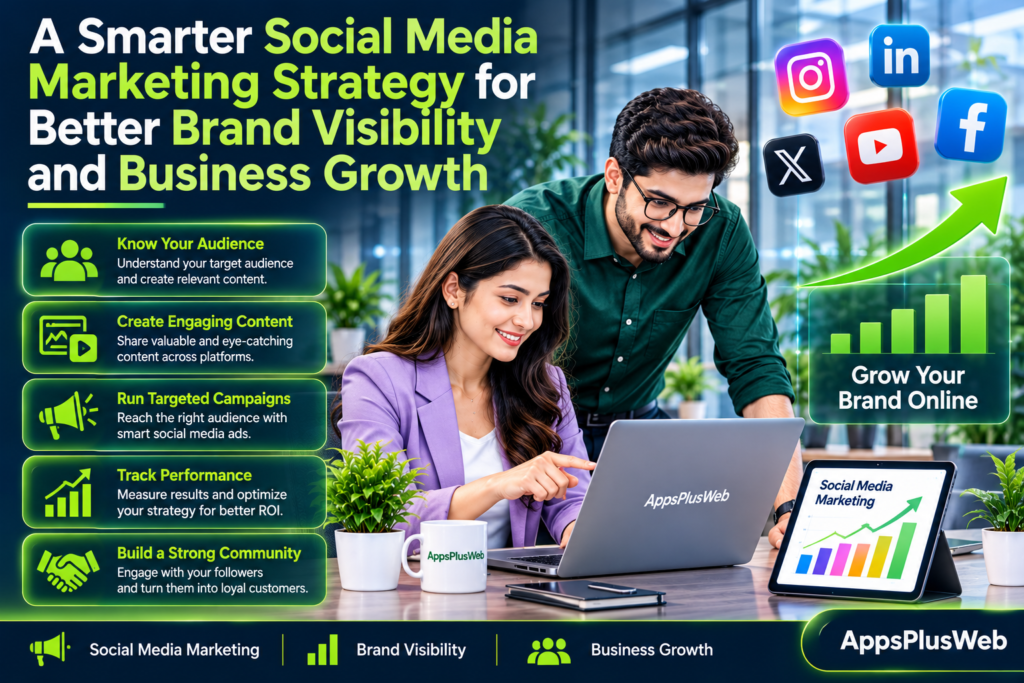
Introduction – Why Social Media Marketing Matters for Your Business
Social media has become an important part of how people discover businesses, explore products, and decide which services they want to use. Platforms such as Facebook, Instagram, LinkedIn, and YouTube give businesses opportunities to connect with potential customers, communicate their brand value, and build lasting relationships.
However, simply creating social media accounts and publishing occasional posts is not enough to achieve meaningful results. Businesses need a clear strategy that focuses on the right audience, relevant content, consistent communication, and measurable objectives.
For companies looking to strengthen their digital presence, combining social media activities with professional digital marketing planning is important. Working with an experienced SEO company in Delhi can also support a broader online visibility strategy by connecting search optimization with other digital marketing activities.
A well-planned social media approach can help your business become more recognizable, build customer trust, generate enquiries, and create opportunities for sustainable growth.
2. How Social Media Marketing Builds Brand Visibility
Brand visibility means making your business recognizable to the people who may need your products or services. Social media provides different ways to introduce your brand, share useful information, and maintain communication with your audience.
When your business regularly publishes relevant content, potential customers get more opportunities to become familiar with your brand. Over time, consistent messaging and a recognizable visual identity can strengthen brand recall.
Some important ways social media supports visibility include:
- Regular brand communication: Share business updates, service information, announcements, and useful insights.
- Visual brand recognition: Use consistent colours, design elements, logos, and messaging across platforms.
- Audience discovery: Reach people through relevant topics, hashtags, platform recommendations, and sharing.
- Community interaction: Encourage conversations that make your business more approachable.
- Content distribution: Share articles, videos, and resources to introduce your brand to new audiences.
The objective should be to create a recognizable and trustworthy brand rather than simply increasing the number of posts or followers.
3. Choosing the Right Social Media Platforms for Your Business
Every social media platform has its own audience, content formats, and communication style. Businesses should select platforms according to their industry, customer preferences, and marketing objectives.
Facebook: Facebook offers opportunities to share business updates, images, videos, events, and community-focused content. It can be useful for businesses that want to maintain customer relationships and reach different audience groups.
Instagram: Instagram is suitable for visual storytelling through images, Reels, Stories, and short videos. Product-based businesses, lifestyle brands, restaurants, and service providers can use it to showcase their work and communicate their brand personality. Businesses can explore Instagram for Business to understand its professional features.
LinkedIn: LinkedIn is particularly relevant for B2B companies, professional services, recruitment, and industry networking. Businesses can publish professional insights, share company updates, and connect with decision-makers through LinkedIn Marketing Solutions.
YouTube: YouTube provides opportunities to publish tutorials, product demonstrations, educational videos, interviews, and customer-focused content. Video content can help explain complex services in an accessible way.
Instead of trying to maintain an active presence everywhere, identify the platforms where your potential customers are most likely to spend time. A focused strategy is often easier to manage and measure.
4. Creating Social Media Content That Attracts Customers
Content is the foundation of an effective social media strategy. It communicates what your business offers and gives people a reason to follow, engage with, and remember your brand.
A balanced content plan should include different formats rather than promoting products or services in every post.
Educational content: Share practical tips, industry knowledge, frequently asked questions, and useful information that addresses customer problems.
Service and product highlights: Explain your offerings, their features, and the situations in which customers may benefit from them. Keep the information accurate and easy to understand.
Short-form videos: Create Reels and short videos to demonstrate products, explain processes, introduce team members, or share quick recommendations.
Customer experiences: Share genuine testimonials, reviews, and project experiences with appropriate permission. Authentic customer feedback can make your brand more relatable.
Behind-the-scenes content: Give audiences a look at your workplace, team activities, work processes, and company culture.
Seasonal and relevant posts: Share suitable festival greetings, business announcements, and industry-related updates when they are relevant to your audience.
A content calendar can make publishing more organized. Plan topics in advance, maintain a consistent schedule, and review performance to understand which formats your audience prefers.
5. How Social Media Engagement Builds Customer Trust
Social media is not only a publishing channel; it is also a communication platform. Customers may use comments, direct messages, and public reviews to ask questions or understand a business before making a decision.
Responding professionally and consistently can improve the customer experience.
Here are some practical ways to build engagement:
- Reply to relevant comments and messages in a timely manner.
- Answer questions with clear and accurate information.
- Acknowledge customer feedback professionally.
- Share genuine customer experiences where permission has been provided.
- Participate in relevant conversations without unnecessary promotion.
- Maintain a consistent and respectful brand voice.
Businesses should also pay attention to the questions customers ask repeatedly. These questions can reveal common concerns and provide ideas for future posts, videos, and website content.
Meaningful engagement is more valuable than collecting likes without understanding whether the audience has a genuine interest in your business.
6. Using Social Media Advertising to Reach the Right Audience
Organic social media activities can build long-term relationships, while paid campaigns provide additional opportunities to reach specific audience groups. Advertising can be useful when a business wants to promote a new service, introduce a product, generate enquiries, or increase awareness.
Before launching an advertising campaign, define its main objective. A campaign designed for brand awareness will require a different approach from one focused on website visits or lead generation.
Important considerations include:
Audience selection: Identify relevant audience characteristics, interests, locations, and behaviours according to the available platform options and your campaign objectives.
Creative development: Use clear visuals, relevant messages, and accurate information. Your advertisement should communicate its purpose quickly.
Budget planning: Set a realistic budget based on your business objectives. Begin with a manageable campaign and review its performance before making larger changes.
Landing page experience: If an advertisement directs people to your website, ensure that the destination page is relevant, mobile-friendly, and easy to navigate.
Performance monitoring: Review clicks, enquiries, conversions, and campaign costs. Use these results to identify opportunities for improvement.
Businesses can explore Meta Business to learn about advertising and business tools across Meta platforms. Advertising performance should be evaluated through meaningful business outcomes rather than impressions alone.
7. Combining Social Media Marketing with SEO for Stronger Online Visibility
Social media marketing and search engine optimization have different roles, but they can support a connected digital marketing strategy.
SEO focuses on improving a website’s visibility in relevant search results. Social media focuses on distributing content, building relationships, and communicating with audiences across social platforms.
When these activities work together, businesses can create a more consistent online presence.
For example, a company can publish an informative article on its website and share it through LinkedIn, Facebook, or other relevant channels. A useful video can introduce a service, while a related website page provides more detailed information.
Some ways to connect both activities include:
- Share useful website articles through relevant social platforms.
- Maintain consistent business information and brand messaging.
- Create social posts around topics that customers frequently search for.
- Use audience questions to identify new content opportunities.
- Link relevant social content to useful website resources.
- Review website visits and enquiries generated through social channels.
Social media engagement should not be treated as a direct guarantee of higher Google rankings. Instead, focus on how both channels contribute to content discovery, brand recognition, customer communication, and business growth.
8. Social Media Marketing Strategies for Competitive Business Markets
Businesses operating in competitive markets need a clear understanding of their customers and the messages that make their brand relevant. Publishing generic promotional content may not be enough to attract attention.
Start by researching your audience. Understand their common questions, preferences, challenges, and reasons for choosing one business over another.
Next, develop content that reflects your services and local market. For example, a business serving a particular city can share relevant project updates, local customer experiences, service information, and useful market insights.
You can also strengthen your approach through:
- Location-relevant content where appropriate.
- Consistent branding across social media profiles.
- Genuine customer reviews and feedback.
- Informative videos explaining your services.
- Campaigns designed around specific business objectives.
- Regular monitoring of audience responses.
Avoid copying competitors’ posts or publishing repetitive content simply to maintain activity. A distinctive brand voice and useful information can make your business more recognizable.
9. Measuring Social Media Marketing Performance and Business Growth
An effective strategy should be measured regularly. Tracking performance helps businesses understand whether their activities are reaching the right people and supporting their objectives.
Important metrics include:
Reach and impressions: Reach indicates how many unique accounts saw your content, while impressions show how many times it was displayed.
Engagement: Monitor meaningful interactions such as comments, shares, saves, and relevant responses.
Audience growth: Review follower growth over time, but consider audience relevance rather than focusing only on numbers.
Website traffic: Track visits coming from social media platforms and identify which posts or campaigns generate interest.
Enquiries and leads: Measure calls, messages, form submissions, and other actions that indicate potential customer interest.
Conversions and return on investment: Evaluate whether your campaigns contribute to actual business outcomes compared with the resources invested.
Use the analytics available on each platform alongside your website analytics tools. Review the data regularly and adjust your content, audience approach, and campaigns based on the results.
10. Common Social Media Marketing Mistakes Businesses Should Avoid
Even businesses that publish frequently may struggle to achieve meaningful results if their approach lacks direction.
Some common mistakes include:
- Posting without a plan: Random publishing can create inconsistent communication and make performance difficult to evaluate.
- Ignoring audience interaction: Unanswered questions and messages can create a poor customer experience.
- Focusing only on followers: A large audience does not automatically translate into relevant enquiries or sales.
- Over-promoting services: Constant advertisements can reduce audience interest. Balance promotional posts with educational and engaging content.
- Using identical content everywhere: Different platforms have different audiences and content formats. Adapt your messaging accordingly.
- Ignoring analytics: Without performance reviews, businesses may continue investing time and money in activities that are not meeting their objectives.
Avoiding these mistakes can make social media activities more organized, relevant, and effective.
11. Why Choose AppsPlusWeb for Your Digital Marketing Strategy
Businesses need a practical marketing approach that connects their goals with the right platforms, content, and communication methods. AppsPlusWeb offers digital marketing solutions designed around business requirements and online growth objectives.
A structured approach can include social media planning, content development, creative campaigns, audience research, advertising management, and performance monitoring.
The focus should remain on understanding the business, identifying the right audience, and creating communication that reflects the brand’s value.
With consistent planning and regular performance analysis, businesses can build a stronger social media presence, improve customer engagement, and identify opportunities to generate relevant enquiries.
12. Conclusion – Build a Stronger Brand Through Smarter Social Media Marketing
Social media marketing is most effective when every activity has a clear purpose. Choosing suitable platforms, publishing useful content, engaging with customers, and measuring performance can help businesses develop a recognizable brand and build stronger customer relationships.
However, long-term growth requires more than social media activity alone. Businesses should connect their social media efforts with website quality, search visibility, customer experience, and wider digital marketing objectives.
If your business wants to strengthen its online presence across competitive markets, professional SEO services in Mumbai can form part of a broader digital growth strategy alongside social media marketing.
AppsPlusWeb focuses on digital marketing strategies that support brand visibility, meaningful audience engagement, and business development. With a consistent and customer-focused approach, your business can create more opportunities to connect with potential customers and grow online.