
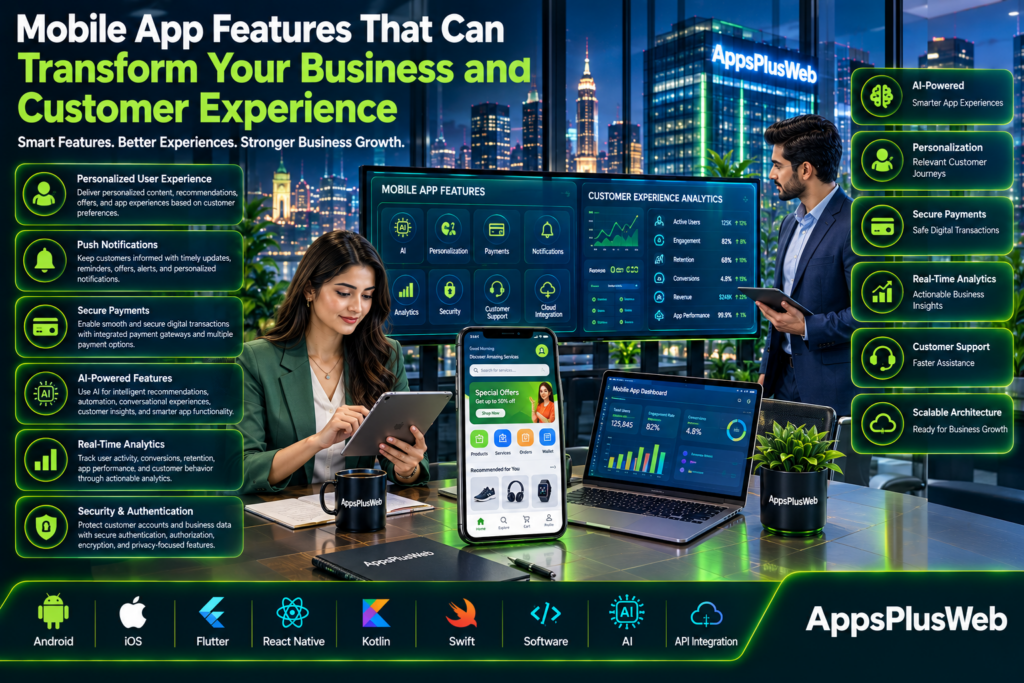
Mobile applications have become an important digital channel for businesses that want to connect with customers, simplify services, and create convenient experiences. A well-planned app can bring multiple business functions together while giving users quick access to products, services, information, and support.
Choosing the right features is an important part of building an effective application. Businesses should focus on functionality that solves real customer needs and supports their long-term objectives. A professional mobile app development company can help businesses plan the right combination of features according to their industry, audience, and growth strategy.
User-Friendly Registration and Login
The first interaction users have with an application can influence their overall experience. A simple registration and login process can make it easier for customers to start using the platform.
Businesses can provide options such as mobile number verification, email authentication, social login, and secure password management. An easy onboarding process can reduce unnecessary steps and help users reach the main features of the application quickly.
For applications handling sensitive information, secure authentication and appropriate access controls are also important. Businesses should balance convenience with strong security practices to create a reliable user experience.
Personalized User Experience
Personalization can make an application more relevant to individual users. Instead of showing identical content to everyone, businesses can use preferences, previous interactions, location, or purchase history to provide more relevant experiences.
For example, an eCommerce application can recommend products based on browsing or purchasing activity. A learning platform can suggest relevant courses, while a service application can highlight frequently used options.
Personalized experiences can help users discover useful information faster and can encourage more meaningful interaction with the application.
Push Notifications and Real-Time Updates
Push notifications provide businesses with a direct communication channel. When used appropriately, they can keep customers informed about important events and updates.
Applications can send notifications for:
- New products and services
- Order and delivery updates
- Appointment reminders
- Special offers
- Payment confirmations
- Important account information
Notifications should be relevant and timely. Sending excessive messages can reduce the quality of the user experience, while useful updates can encourage customers to remain connected with the application.
Secure Payment and Transaction Features
For businesses that sell products or services through an application, secure payment functionality can be an essential feature. Customers expect convenient payment options and a smooth checkout process.
Applications can support different payment methods depending on the business model and target audience. A streamlined transaction process can reduce unnecessary steps and make purchasing more convenient.
Businesses should also prioritize transaction security, data protection, secure authentication, and reliable payment integrations. These elements can help create confidence when customers use the application for financial transactions.
Search, Filters and Easy Navigation
As an application grows, finding the right information can become more difficult without an effective navigation system. Search and filtering features help users locate products, services, content, or other information quickly.
An eCommerce application may offer filters for price, category, brand, availability, or location. A real estate application can provide filters for property type, budget, area, and amenities.
Clear categories, intuitive menus, search suggestions, and well-organized screens can make navigation easier and reduce the time users need to complete important tasks.
Customer Support and Communication
Good customer support can strengthen the relationship between a business and its users. Mobile applications can include communication features that allow customers to ask questions, report issues, or request assistance.
Depending on the business model, useful options may include in-app chat, support tickets, FAQs, contact forms, and automated responses.
For businesses offering services, communication features can also support appointment discussions, booking assistance, order-related questions, and other customer requirements.
Providing accessible support within the application can create a more convenient experience and help businesses respond to customer needs efficiently.
Analytics and Business Insights
Analytics features can help businesses understand how customers interact with their applications. Information about frequently used screens, popular services, engagement patterns, and user activity can provide valuable insights.
Businesses can use these insights to identify successful features and areas that may require improvement. For example, if users frequently visit a particular service but leave before completing an action, the business can review that part of the customer journey.
Analytics can also support marketing decisions, product planning, and future application improvements. Data should be collected and handled responsibly with appropriate privacy practices.
Why Businesses Need Scalable App Features
Business requirements can change as a company grows. An application should therefore be designed with future development in mind.
Scalable architecture can make it easier to introduce new features, support additional users, integrate external services, and expand into new markets.
Businesses may eventually require CRM integration, ERP connectivity, cloud services, artificial intelligence, advanced analytics, loyalty programs, or additional payment options.
Planning for scalability from the beginning can help reduce technical limitations and create a stronger foundation for future development.
Choosing the Right Development Partner
The development partner plays an important role in turning business requirements into a reliable application. Businesses should evaluate technical expertise, UI/UX capabilities, development experience, testing processes, security practices, communication, and long-term support.
A strong partner should take time to understand the business model and recommend features based on actual customer needs rather than adding unnecessary functionality.
For businesses searching for a local technology partner, a mobile app development company in Delhi can provide customized development solutions for startups, small businesses, enterprises, and organizations across different industries.
Before starting a project, businesses should also review the development process, estimated timeline, project scope, technology stack, maintenance approach, and support options.
Conclusion
The right mobile app features can improve customer convenience, strengthen communication, simplify transactions, and provide businesses with valuable insights. Features such as personalized experiences, notifications, secure payments, search, customer support, and analytics can contribute to a more useful and engaging application.
However, successful development begins with understanding the target audience and selecting features that support specific business objectives. AppsPlusWeb helps businesses create customized mobile solutions with modern technology, user-focused design, scalable architecture, testing, and ongoing support.
A thoughtfully planned application can become an important digital channel for improving customer experiences while supporting long-term business growth.